














C-15 3rd Floor, Amar Colony Main Market,
Lajpat Nagar - 4,
New Delhi - 110024, India
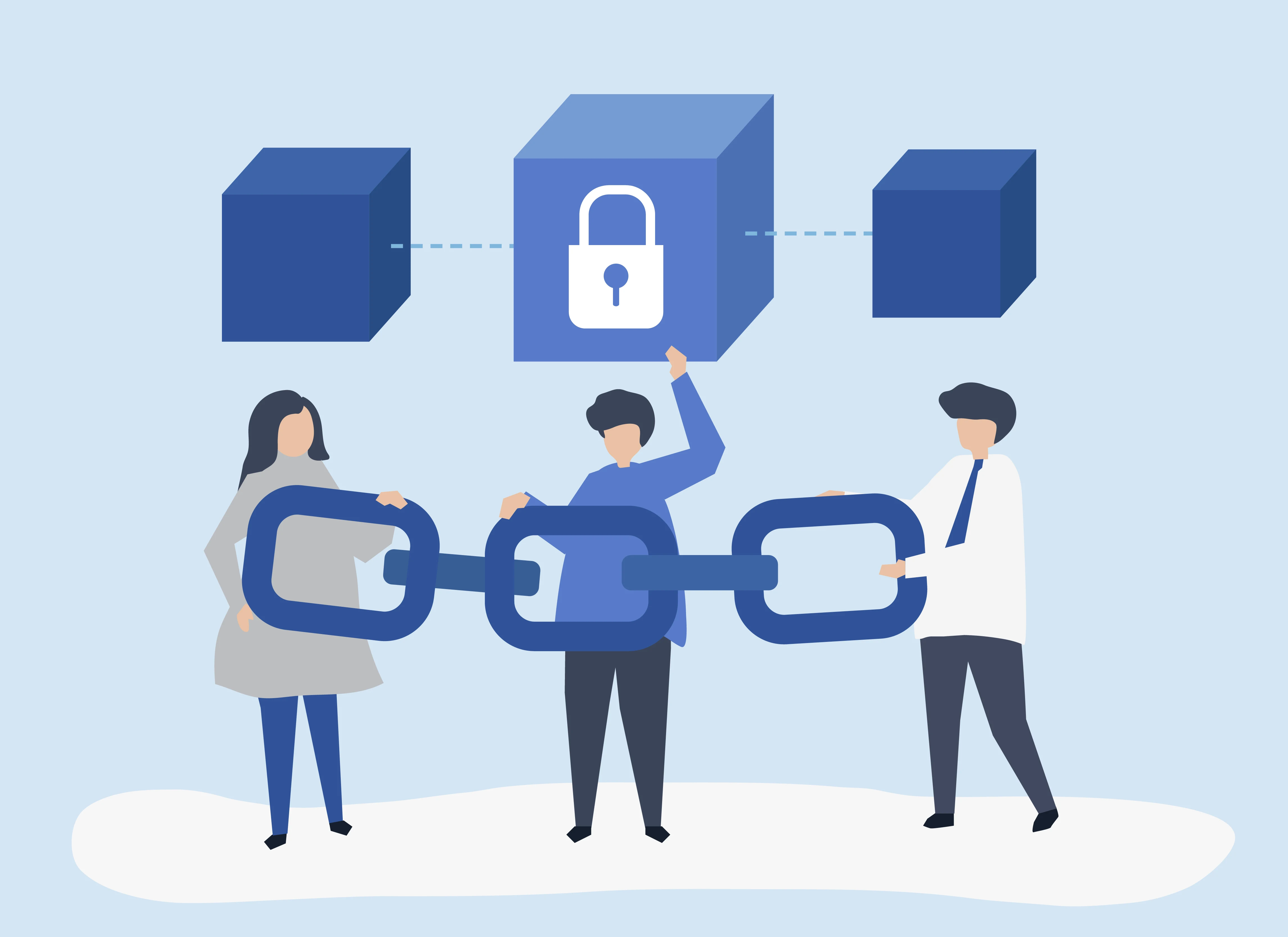
Blockchain conversations rarely begin with the technology itself. It usually comes up when trust, traceability, or multi-party validation becomes difficult to manage through traditional systems. Many businesses explore a blockchain service while working through challenges around data integrity. Records need to be consistent across stakeholders. Changes must be visible, not assumed. And control can’t sit with just one entity. What starts as an exploration often leads into adjacent decisions. How does this integrate with existing applications. Where does the data actually live. What needs to remain off-chain. In practice, these choices don’t stay isolated. Architecture shifts slightly. Security models evolve. Even performance expectations get recalibrated once real-world usage is considered. So while blockchain may appear as a single layer, it tends to touch multiple parts of the system quietly. Which is why most teams end up looking beyond just implementation.
Some teams come in with a clear use case. Supply chain visibility. Transaction validation. Digital records that need to be tamper-resistant. Others are still exploring. They’ve heard enough to know it might fit, but not where exactly. There are startups building something new from the ground up. Then there are established businesses trying to adapt an existing process without disrupting operations. In a few situations, earlier attempts didn’t go as planned. Too complex. Not aligned with actual business needs. Different starting points. Different expectations. The conversations tend to stay grounded in use, not hype.
If you just need to store data, use a database; it’s ₹0 compared to the overhead of a chain. But if you need a "Single Source of Truth" that no one—not even the admin—can delete or faking, that’s Blockchain. For a $10,000 (roughly ₹9,21,500) international trade deal, "Trust" is the product. We build private Hyperledger or Ethereum-based apps where every transaction is a permanent digital fingerprint. It’s not just "storage"—it’s an audit trail that can't be bribed.
They won't replace your lawyers, but they’ll fire your "Middlemen." A Smart Contract is just code that says: "If Part A happens, Pay Part B." No waiting for a bank manager in Mumbai to "approve" a transfer. We’ve seen logistics firms save roughly ₹1.5 Lakhs ($1,630) a month in administrative "chasing" just by automating release-of-funds once a GPS sensor confirms a delivery. It’s "if-this-then-that" logic on steroids.
On a public chain like Ethereum? Maybe. If the network gets congested, a simple transaction could cost you $50 (approx. ₹4,600). That’s a deal-breaker for small apps. That’s why at JIL, we often build on Layer 2 solutions or Private Sidechains. You get the security of the big chains but with "Gas" costs that are fractions of a paisa. We optimize the code so you aren't "burning" money just to move data.
You can't "Photoshop" a physical QR code that’s tied to a unique NFT on the chain. From the factory in Gujarat to a retail shelf in London, every hand-off is scanned and timestamped. If a "fake" batch tries to enter the system, the "Chain of Custody" breaks instantly. It’s the ultimate "Anti-Tamper" system. For high-end pharma or luxury exports, this isn't a "cool feature"—it’s a survival requirement for global compliance.
"Integration" is where most agencies fail. They try to rebuild everything. We don't. We build "Middleware" that talks to your legacy SQL or Oracle DB and pushes the "Critical Proofs" to the Blockchain. You keep your old UI, but you gain a "Verify" button that proves your data is 100% authentic to outside auditors. It’s a surgical upgrade that costs a fraction of a total rewrite—usually starting around ₹4 Lakhs ($4,340) for a custom POC (Proof of Concept).