






C-15 3rd Floor, Amar Colony Main Market,
Lajpat Nagar - 4,
New Delhi - 110024, India
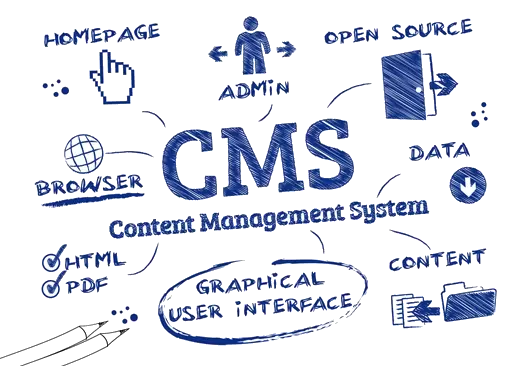
CMS Application or software is simple, effective and tailor made answer to the tedious and time consuming headache of managing huge data of your site and worries of having missed any delete, add or modification requirements. Meaningfully developed Content Management System, gives site admin a freedom to delete, add, modify the data without disturbing the code of the site, not only this it also allows admin to add new to pages and even search across the entire site.
Typically, CMS (Content Management System) are best suited for large sites. But even small sites with a few files can be CMS - enabled at very low cost.
If you're in need of a CMS for small sites based without database, get in touch with us and you can be online quickly.

Many businesses adopt a CMS to make content easier to manage. That is usually the starting point. But what typically happens is the CMS begins to influence more than just publishing. Content structures start affecting how pages are built. Permissions impact internal workflows. Integrations with other systems quietly shape what the CMS can or cannot handle over time. These dependencies are not always clear in the early stages. At JIL, we tend to look at CMS decisions as part of a broader system. Not just where content sits, but how it flows across the business. A choice made here often affects development flexibility, performance, and even future redesign efforts. This is why exploring connected areas early tends to avoid limitations later. Many teams realise this only after the CMS becomes harder to adapt than expected.
Some teams approach a CMS with a clear structure in mind. Others start with a basic setup and expect it to evolve. Both situations come up often in our work at JIL. We have worked with businesses managing large volumes of content, and with teams where content is still being organised for the first time. In many cases, the challenge is not the system itself, but how content responsibilities are distributed internally. There are also scenarios where multiple teams interact with the CMS. Marketing, operations, sometimes external partners. Access, workflows, and ownership are not always defined early. That tends to influence how effectively the system is used. Some implementations remain simple. Others grow in layers over time. The pattern is familiar. What matters is how decisions are handled as the CMS starts becoming central to daily operations.
Honestly? Itโs about freedom. A CMS gives you 100% control so you aren't calling a developer every single time you need to change a comma, text or a price. Upload your blogs, update the text, change or add image(s), on your own.
100% Yes. We build JIL dashboards that is simpler than your social media feed. No "coding" or technical wizardry required. We give you a quick handholding walkthrough so you feel like a pro from Day 1.
Based on the nature of your business, your selection or choice of platform, like if you're heavy on blogs and content, WordPress is recommended. Selling products? Shopify is recommended. But our all time recommended is JIL CMS which gives you liberty from being stuck with one particular domain and as per business requirement agile and scalable at any point of time.
Directly. Google loves fresh content. With a CMS, you can post 2 blogs a week or update your service list in 5 minutes. Always updated site content in the eyes of search engines, means more traffic and leads in your account.
We don't play around with security. Every CMS site JIL delivers comes with a digital "lockdown"โSSL certificate(s), hardened settings, and regular updates. We make sure your site stays a fortress, not a target.
Absolutely. We specialize in these "handshakes" where we move your current content and SEO value into a modern CMS. You keep your Google rankings, but you gain a modern engine under the hood.